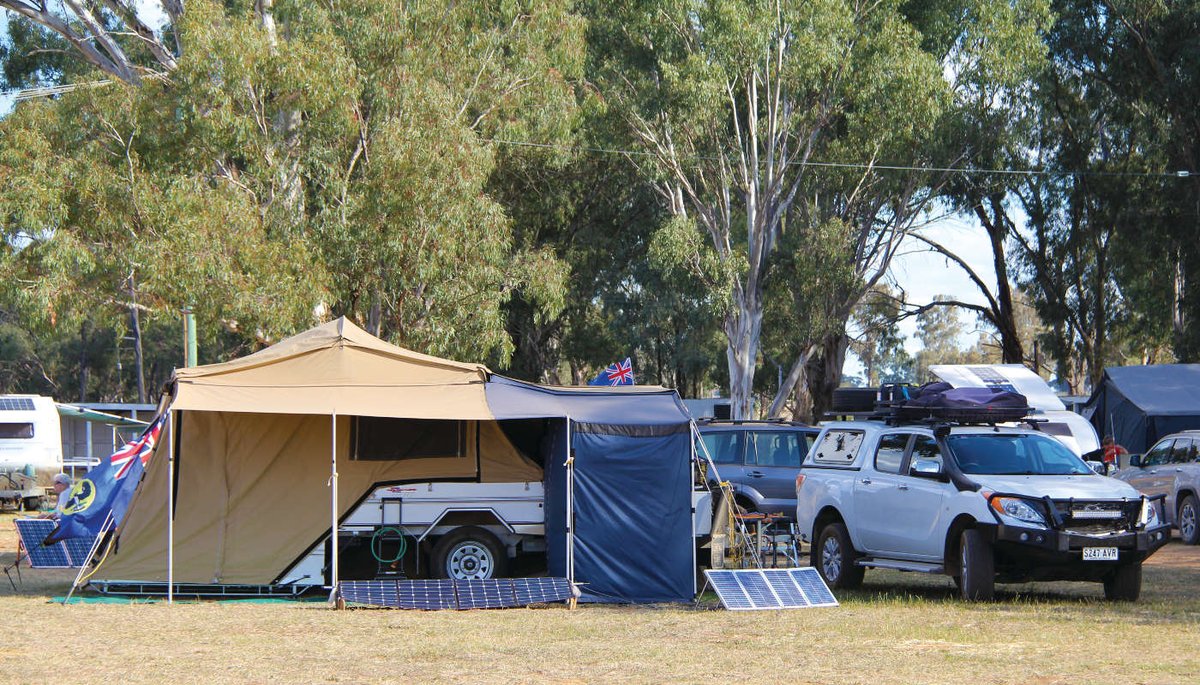
Imagine waking up to the gentle rustle of leaves, the distant call of a bird, and nothing else. No jarring drone of a gas generator shattering the peace of your campsite. For too long, the convenience of off-grid power has come with a noisy, polluting price tag, but the landscape of quiet & eco-friendly camping power solutions has been revolutionized. Today, you can power everything from your phone to a portable fridge without disturbing nature's symphony or leaving a carbon footprint.
This isn't about roughing it; it's about smart, sustainable comfort. We're talking about advanced portable power stations and solar generators that deliver reliable electricity, virtually silently, and with zero emissions. They are the game-changer for anyone seeking a truly serene outdoor escape, whether you're backpacking deep into the wilderness or enjoying a family RV adventure.
At a Glance: Your Guide to Quiet, Clean Camping Power
- Ditch the Noise & Fumes: Say goodbye to loud gas generators and their harmful emissions.
- Embrace Silence: Solar generators operate as quietly as 30dB (a whisper), well below campground noise limits.
- Power Everything: Charge phones, cameras, run portable fridges, lights, and even medical devices like CPAPs.
- Safety First: Zero emissions mean these units are safe for indoor use, unlike gas alternatives.
- Key Considerations: Choose your unit based on capacity (Wh), output power (Watts), port variety, battery type (LiFePO4 recommended), charging options, and portability.
- Invest in Longevity: LiFePO4 batteries offer 10+ years of use, extreme temperature stability, and enhanced safety.
- Solar for Sustainability: Pair with solar panels for continuous, free energy wherever the sun shines.
The Age-Old Problem: Why Traditional Generators Just Don't Cut It Anymore
For decades, the default choice for off-grid power was a gas-guzzling generator. They worked, certainly, but at what cost? Think about it:
- The Roar: Most traditional gas generators blare at 80-100 decibels (dB), equivalent to a lawnmower or a garbage disposal. This isn't just annoying; prolonged exposure can be harmful, and it certainly spoils the tranquility of nature. Many campgrounds now outright ban or heavily restrict their use.
- The Fumes: Spewing carbon monoxide and other pollutants, gas generators aren't just bad for the environment; they're dangerous. Carbon monoxide poisoning is a serious risk, making them unsafe for any enclosed space, including tents or RVs.
- The Upkeep: They require fuel, oil changes, spark plug replacements, and can be finicky to start, especially in cold weather.
- The Weight & Bulk: Transporting fuel and the generator itself adds significant weight and takes up precious space.
It's clear: for the conscious camper seeking peace and environmental responsibility, a better solution was desperately needed.
The Quiet Revolution: Understanding Solar Generators & Portable Power Stations
Enter the era of solar generators and portable power stations. While often used interchangeably, both refer to high-capacity battery packs paired with the ability to recharge from various sources, crucially including solar panels. These devices are fundamentally different from their fossil-fueled predecessors:
- Virtually Silent Operation: This is their standout feature. While inverter generators (a quieter type of gas generator) might get down to ~75dB, solar generators often operate below 50dB—the sound of a quiet conversation—and many are as low as 30dB, a mere whisper. You'll hear the crickets, not your power source.
- Zero Emissions: No gas, no exhaust, no carbon monoxide. This makes them perfectly safe for use inside your tent, RV, or cabin.
- Clean Energy: When paired with solar panels, you're tapping into a truly renewable energy source. Even when charging from a wall outlet, you're using grid electricity, which is increasingly sourced from renewables.
- Ease of Use: Plug and play. No pulling cords, no mixing fuel, no complicated maintenance. Just switch it on.
These devices store energy in advanced battery packs, then convert it to usable AC (for household appliances) or DC (for car-style plugs and USB devices) power through an integrated inverter.
Decoding the Decibels: What 'Quiet' Really Means for Your Campsite
To truly appreciate the "quiet" aspect of these modern power solutions, it's helpful to understand decibels (dB). This logarithmic scale means that a small increase in dB represents a significant increase in sound intensity. For instance, 60dB is ten times louder than 50dB.
- Whisper: ~30 dB
- Quiet Room/Rustling Leaves: ~40 dB
- Refrigerator Hum: ~50 dB
- Normal Conversation: ~60 dB
- Lawnmower/Traditional Gas Generator: 80-100 dB
Now, consider your options: - Traditional Gas Generators: These offenders regularly hit 80-100dB. Imagine trying to enjoy a peaceful evening with that noise drowning out nature. This is why many campgrounds have stringent rules or outright bans.
- Inverter Generators: A step up in politeness, these gas generators throttle their engine speed to match power demand, making them more fuel-efficient and quieter, typically around 75dB. Better, but still far from silent.
- Solar Generators/Portable Power Stations: The champions of quiet. While they might produce a slight hum from internal cooling fans under heavy load, many models operate as quietly as 30dB, especially at lower outputs. Even at maximum load, they rarely exceed 50dB, blending into ambient background noise rather than dominating it. This is the difference between hearing nature and hearing your generator.
The choice is clear if tranquility is high on your camping priority list.
Why Go Green? The Eco-Friendly Advantage
Beyond the blissful quiet, the environmental benefits of these power solutions are profound:
- Zero Emissions: No carbon monoxide, no hydrocarbons, no nitrogen oxides. You're not polluting the air you breathe or the natural spaces you've come to enjoy. This means they're safe to use inside your tent, RV, or cabin—a critical safety feature gas generators can never offer.
- Renewable Energy Integration: Pairing your power station with solar panels means you're harnessing the sun's energy, a truly sustainable resource. You're not reliant on fossil fuels, reducing your environmental footprint significantly.
- Reduced Noise Pollution: Noise isn't just annoying; it can disturb wildlife and other campers, detracting from the collective outdoor experience. By choosing quiet power, you're being a good neighbor to both nature and your fellow humans.
- Long-Term Sustainability: With durable LiFePO4 batteries offering thousands of charge cycles and over a decade of lifespan, these units represent a long-term investment in sustainable power.
Choosing an eco-friendly power solution isn't just a trend; it's a commitment to preserving the beauty and peace of our natural world for generations to come.
Your Power Needs: How to Calculate What You Really Need
Selecting the right power solution starts with understanding your power needs. This isn't guesswork; it's a simple calculation.
1. Capacity (Wh/kWh): How Much Energy Can It Store?
Capacity is measured in Watt-hours (Wh) or kilowatt-hours (kWh, where 1 kWh = 1000 Wh). This tells you how long a device can run.
How to Calculate Your Needs:
- List Your Devices: Make a comprehensive list of everything you plan to power.
- Find Wattage (W): For each device, find its wattage (usually on a label or in the manual).
- Estimate Usage Hours: How many hours per day will each device run?
- Calculate Daily Wh per Device: Multiply Wattage (W) by Usage Hours (h).
- Sum Total Daily Wh: Add up the Wh for all your devices.
- Account for Trip Duration: Multiply your Total Daily Wh by the number of days you'll be camping.
- Factor in Efficiency: Power stations aren't 100% efficient. Divide your total by 0.85 (for 85% efficiency) to get a realistic capacity target.
Example:
- Phone (10W) for 2 hours = 20 Wh
- Laptop (60W) for 4 hours = 240 Wh
- Portable Fridge (40W) for 12 hours = 480 Wh
- LED Lights (5W) for 5 hours = 25 Wh
- Total Daily Wh: 20 + 240 + 480 + 25 = 765 Wh
- For a 3-day trip: 765 Wh/day * 3 days = 2295 Wh
- With 85% efficiency: 2295 Wh / 0.85 = ~2700 Wh required capacity
- Small Unit (100-300Wh): Great for minimal charging – phones, cameras, small lights.
- Mid-Range (700-1500Wh): Typical for family camping, handling multiple devices, small appliances, and portable fridges.
- Large Units (2000Wh+): Ideal for extended trips, RVs, powering high-draw items, or serving as a backup home power.
2. Output Power (Watts): How Much Electricity Can It Deliver at Once?
This is the maximum power your station can output instantaneously. It's measured in Watts (W) and has two key figures:
- Continuous AC Output: The power it can sustain. Ensure this number comfortably exceeds the combined running wattage of all devices you plan to use simultaneously by at least 15%.
- Peak/Surge Wattage: Crucial for appliances with motors (fridges, kettles, power tools). These devices demand a much higher surge of power for a few milliseconds when they first start up. Your power station needs to be able to handle this surge, or it will trip an overload.
Always check the peak/surge requirement for your motor-driven devices.
3. Output Ports: Connecting All Your Gear
A versatile array of ports ensures you can charge or power anything:
- AC Outlets (120V/230V): Standard household plugs. For sensitive electronics like CPAP machines, laptops, or high-fidelity audio, always ensure the power station provides a pure sine wave output. A modified sine wave can damage or inefficiently power these devices.
- DC Outlets (12V): Car-style ports, perfect for portable fridges, 12V fans, or car vacuums.
- USB-A Ports: For older phones, headlamps, and other small gadgets. Look for Quick Charge (QC) capability for faster charging.
- USB-C PD (Power Delivery) Ports: Essential for modern laptops, tablets, and smartphones. These offer high-speed charging (60W, 100W, or even 200W), significantly reducing charge times compared to older USB-A.
Choosing Your Power Partner: Key Considerations
Once you understand your power needs, it's time to dive into the technical specs and features that define a great camping power solution.
Battery Type: The Heart of Your Power Station
Not all batteries are created equal. The two main types you'll encounter are:
- Lithium-ion (Li-ion): (NMC chemistry) Lighter and often less expensive, but with a shorter lifespan (typically 500-800 charge cycles, meaning it retains 80% of its original capacity after that many full charges and discharges).
- Lithium Iron Phosphate (LiFePO4): Highly recommended for frequent campers.
- Lifespan: Superior cycle life of 2500-3500 cycles (or more), translating to 10+ years of regular use.
- Safety: Inherently more stable and safer, less prone to overheating or thermal runaway.
- Durability: More robust and stable across a wider range of temperatures.
- Drawbacks: Generally heavier and pricier than Li-ion, but the longevity and safety benefits often outweigh these.
Charging Options: Keeping Your Power Topped Up
Versatility in charging is critical for off-grid scenarios:
- AC Wall Charging: The fastest and most common method. Many modern units can go from empty to full in 1-4 hours. Perfect for pre-trip prep.
- Solar Charging: The ultimate eco-friendly choice. Look for units with an integrated MPPT (Maximum Power Point Tracking) controller, which optimizes charging efficiency from solar panels.
- Panel Wattage: You'll need compatible solar panels (e.g., 200W-1000W). A general rule: a 400W panel can charge a 1000Wh unit in about 2.5-3 hours of peak sun.
- Efficiency: Bifacial panels (like EcoFlow's 220W Bifacial) are particularly effective, capturing sunlight from both sides, especially useful in reflective environments like snow or sand.
- Car Charging (12V Port): Useful for topping up while driving to your campsite. It's generally slower than AC or solar but convenient. Some high-end units offer rapid alternator charging.
- USB-C PD Charging: For smaller units, a USB-C PD input can be a convenient way to charge from compatible wall adapters or power banks.
Portability: Matching Your Power to Your Adventure
Consider your camping style when evaluating weight and dimensions:
- Backpacking/Hiking: Every gram counts. Look for ultra-light units (e.g., 3.5 kg / ~7.7 lbs) that offer essential charging without bogging you down.
- Car/RV Camping: You have more leeway. Heavier, higher-capacity units (e.g., 23 kg / ~50 lbs) are perfectly acceptable since they'll stay put or be easily moved short distances. Look for ergonomic handles or even built-in wheels for larger models.
Safety and Smart Features: Beyond Basic Power
Modern power stations come loaded with features that enhance safety, usability, and convenience:
- Battery Management System (BMS): Absolutely essential. A robust BMS protects against overcharge, over-discharge, over-current, short-circuiting, and overheating, ensuring safe operation and prolonging battery life.
- IPX4+ Splash Resistance: Important for outdoor gear. This means it can withstand splashes of water, rain, or condensation, though it's not designed for submersion.
- LCD/LED Display: Provides crucial information like battery level, input/output wattage, estimated run-time, and error messages.
- Ergonomic Handles/Wheels: Makes transport easier, especially for larger units.
- Pass-Through Charging: Allows you to power devices while the unit itself is being charged.
- Expandability: Some larger units can connect to extra battery packs to expand their capacity significantly (e.g., from 1500Wh to 10,000Wh).
- App Control (Bluetooth/Wi-Fi): Monitor and control your power station remotely from your smartphone, checking battery status, turning ports on/off, or updating firmware.
- Built-in LED Lighting: A handy extra for camp lighting or emergencies.
- Optimal Storage Temperature: Store units between 10-30°C (50-86°F) and avoid extreme heat (>40°C / 104°F) for maximum lifespan. Charge every 3-6 months, even when not in use.
Finding Your Perfect Match: Real-World Scenarios and Examples
Let's look at how specific power solutions fit different camping styles, using examples to illustrate the point. When you're ready to explore options, remember to consider all these factors to find the perfect camping generator for your specific needs.
For the Backpacking and Hiking Minimalist: EcoFlow RIVER 2
When every ounce matters, the EcoFlow RIVER 2 is your go-to.
- Key Specs: Weighs only 3.5 kg (~7.7 lbs), 256Wh capacity.
- Why it's great: It's light enough to carry on trails, yet powerful enough to recharge your phone dozens of times, keep your headlamp lit, and even power a small drone. Its 1-hour wall charging means you can quickly top it up before heading out, and with a 110W portable solar panel, you can generate power indefinitely on longer treks. It powers 99% of consumer electronics, handling everything from digital cameras to GPS devices.
For Weekend Warriors: EcoFlow RIVER 2 Max
Stepping up your game for a two or three-day getaway? The RIVER 2 Max offers a significant power boost.
- Key Specs: Double the power and storage of the RIVER 2.
- Why it's great: Ideal for couples or small families on weekend trips. It can comfortably run 80% of essential appliances, like a small portable fridge, camp lights, and all your personal electronics. The 1-hour wall charge is still a huge convenience, and it supports 160W or 220W solar panels for sustained off-grid power. Plus, with EcoFlow app control via Bluetooth/Wi-Fi, you can monitor and manage your power from your tent.
For Campers with Small Appliances: EcoFlow RIVER 2 Pro
If your camping comfort includes a coffee maker, a slow cooker, or a small projector, the RIVER 2 Pro is built for it.
- Key Specs: The most AC output and storage in the RIVER series. Pair it with the 220W Bifacial Portable Solar Panel.
- Why it's great: This setup is fantastic for small groups or those who want a few more creature comforts. The RIVER 2 Pro can handle those higher-wattage small appliances, while the bifacial solar panel is a clever addition. Capturing 15-25% more energy from reflective surfaces (like water, snow, or even light-colored ground), it's incredibly efficient, especially in winter or bright environments, ensuring you have consistent power replenishment.
For Car and RV Camping Enthusiasts: EcoFlow DELTA 2 Max
This is where serious power meets serious adventures. The DELTA 2 Max is designed for those who spend extended periods off-grid.
- Key Specs: Weighs 23 kg (~50 lbs), over 3 times the power and up to 8 times the storage capacity of the RIVER 2 Pro. Offers 3400W AC output (with X-Boost) and 4800W surge power.
- Why it's great: The DELTA 2 Max can run 99% of high-wattage appliances you'd find in an RV, from microwaves to blenders, thanks to its X-Boost technology. And despite its immense power, it operates at a remarkably quiet 30dB, ensuring your RV stays peaceful. It's also compatible with an 800W Alternator Charger, allowing you to recharge 1kWh in just 1.3 hours while driving, making travel days productive power days.
The Ultimate Hybrid: EcoFlow DELTA Pro 3 + Smart Generator 4000 (Dual Fuel)
For unparalleled energy security and extended off-grid living, a hybrid system combines the best of both worlds.
- Key Specs: DELTA Pro 3 boasts massive capacity and output. Smart Generator 4000 runs on unleaded gas or LPG.
- Why it's great: The DELTA Pro 3 provides vast, silent, and emission-free power for your core needs, safely usable indoors. But for truly long-term off-grid scenarios or when solar isn't enough (e.g., cloudy weeks), the Smart Generator 4000 kicks in. It integrates seamlessly with the DELTA Pro 3, providing a powerful, multi-fuel backup charger. Crucially, while the generator itself produces ~70dB under full load, it's designed to be used outdoors only, charging your silent DELTA Pro 3. This gives you peace of mind, knowing you have virtually unlimited power without constant generator noise. Its 800W Alternator Generator compatibility also ensures quick vehicle charging for the DELTA Pro 3.
Beyond the Purchase: Setup, Usage, and Maintenance Tips
Getting the right gear is just the beginning. Proper setup, smart usage, and consistent maintenance will ensure your quiet, eco-friendly power solution serves you reliably for years.
- Pre-Trip Prep is Key: Always test your entire power station setup at home before a trip. Charge it fully, connect your devices, and ensure everything works as expected. This prevents frustrating surprises in the wilderness.
- Optimal Placement: Position your power station in a shaded, well-ventilated area to prevent overheating, especially on hot days. While many units have splash resistance, keeping them dry is always best.
- Cable Management: Secure cables to keep your campsite tidy and prevent tripping hazards. Use cable ties or wraps.
- Solar Panel Angling: If using solar, practice angling your panels for maximum sunlight absorption. The sun's position changes throughout the day, so adjust as needed. Many portable panels come with kickstands for easy positioning.
- Maintain Battery Health:
- Temperature: Store and use your unit within its recommended temperature range (typically 10-30°C / 50-86°F). Extreme heat (>40°C / 104°F) can degrade battery life.
- Charge Level: For long-term storage (when not using it for months), it's best to store LiFePO4 batteries at around 50-80% charge. Avoid storing them completely empty or at 100% full for extended periods.
- Regular Check-ins: If stored for an extended period, charge the unit every 3-6 months to maintain optimal battery health. With proper care, LiFePO4 units can indeed last 10+ years.
- Cleanliness: Wipe down your unit periodically to remove dust, dirt, or debris. Keep the input and output ports clean and free of obstructions.
Power Up Your Next Adventure
The days of choosing between power and peace are over. With today's quiet and eco-friendly camping power solutions, you can embrace the serenity of nature without sacrificing modern conveniences. By understanding your needs, choosing the right unit, and practicing smart usage, you're not just buying a device; you're investing in a more enjoyable, sustainable, and truly tranquil outdoor experience. So go ahead, power up your next adventure—silently, cleanly, and confidently.